Brightin Star 28mm f/2.8 LM
1. Introduction
Designing a pancake lens for the M-mount is an exercise in physics and compromise. The market is flooded with diminutive optics that prioritize form factor over image fidelity, often relegating them to the status of 'toy lenses.'
The Brightin Star 28mm f/2.8 attempts to challenge this paradigm. It promises the build quality of a boutique optic and the performance of a serious tool, all within a housing barely larger than a body cap.
In this comprehensive review, we analyze the unique 'progressive' distortion, the realities of its unit-focusing design, and the specific optical constraints one must accept to gain such portability.
2. Optical Construction
Technical Data
Focal length: 28 mm
Aperture range: f/2.8 – f/16
Covering power: app. 36×24 mm
Optical system: 6 elements in 5 groups (3 high refractive elements & 1 extra-low dispersion element)
Optical coating: multi coating
Aperture mechanism: 9 blades
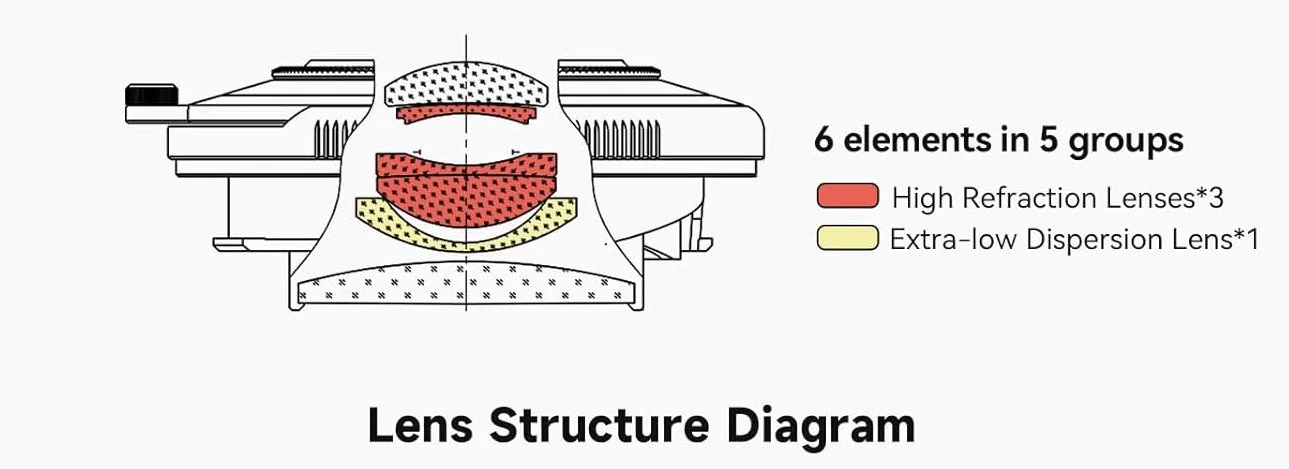
Brightin Star 28mm f/2.8 optical system diagram; source: Brightin Star
Analysis
According to Brightin Star, the guiding philosophy behind this optic was to engineer the most diminutive form factor possible, without compromising essential imaging performance.
The optical formula comprises six elements arranged in five groups. Notably, this design incorporates three high-refractive elements and one extra-low dispersion element, utilizing glass substrates sourced from both Chinese and Japanese foundries. The result is an unconventional optical construction, suggesting a bespoke engineering approach to the constraints of such a compact housing.
A close inspection of the front element confirms a critical detail found in the manufacturer’s schematics: the perimeter reveals the first high-refractive element cemented directly to the front glass. This specific construction choice foreshadows the monochromatic aberrations we observe when utilizing the lens at its maximum aperture.
3. Design, Engineering and Ergonomics
Technical Data
Lens mount: Leica M
Weight: 112.1 g
Diameter: 51.4 mm
Length: 9.9 mm (w/o bayonet)
Filter size: 25.5 mm
Analysis
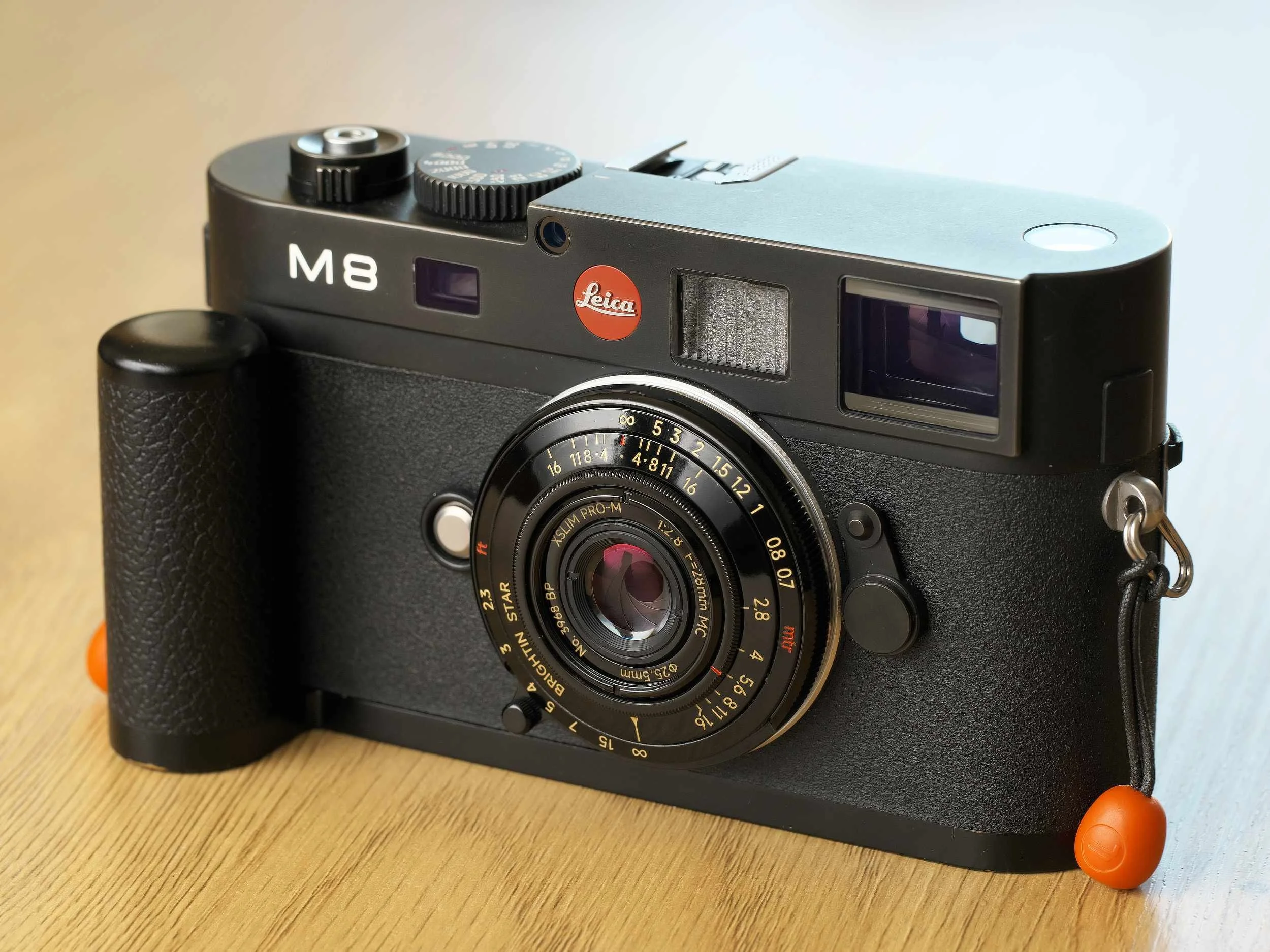
No matter the camera you employ, the lens is remarkably unobtrusive, significantly reducing the volume required in your bag. This diminutive profile is also a distinct advantage in crowded spaces, allowing for a discreet approach.
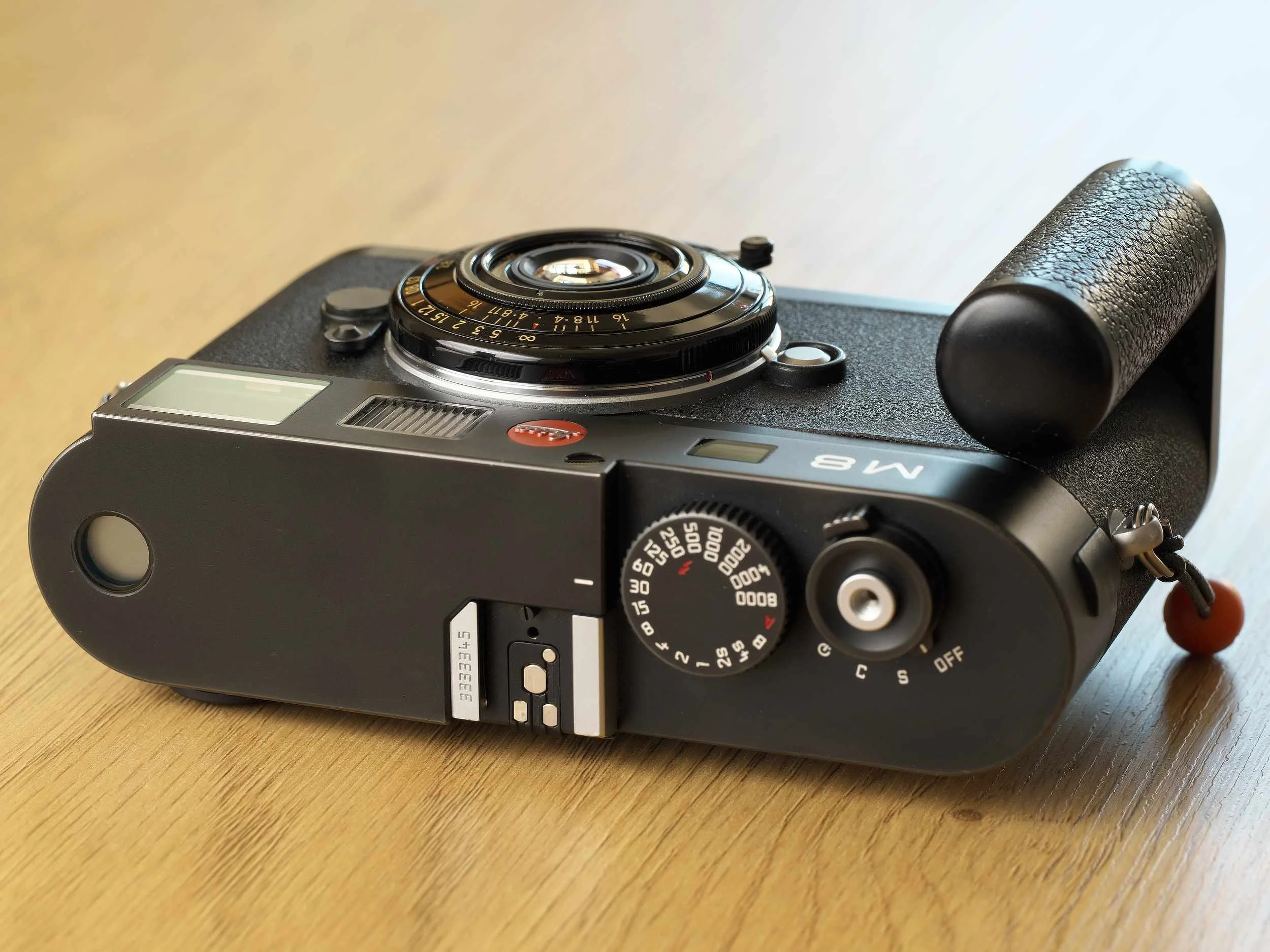
A true pancake lens.
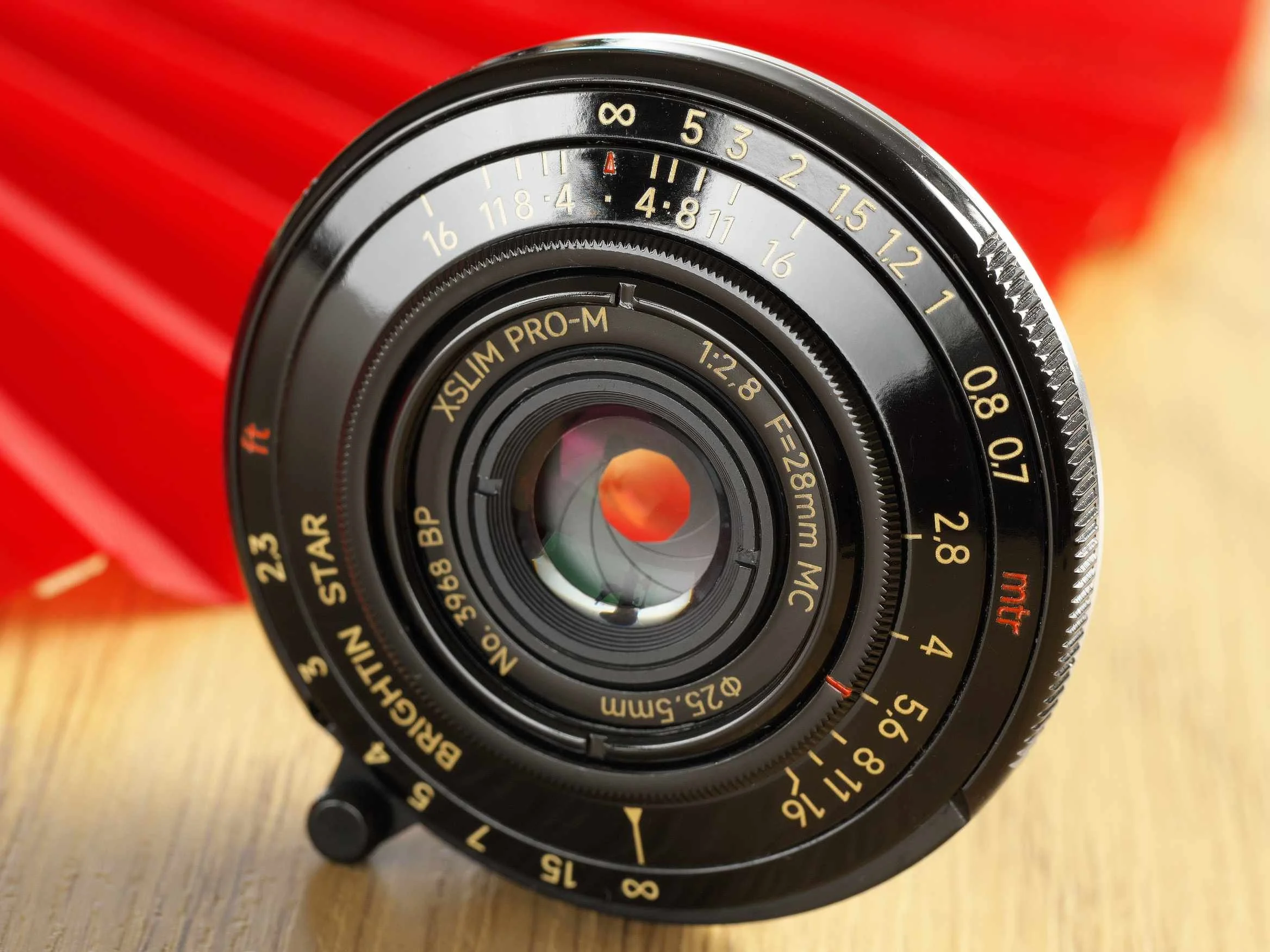
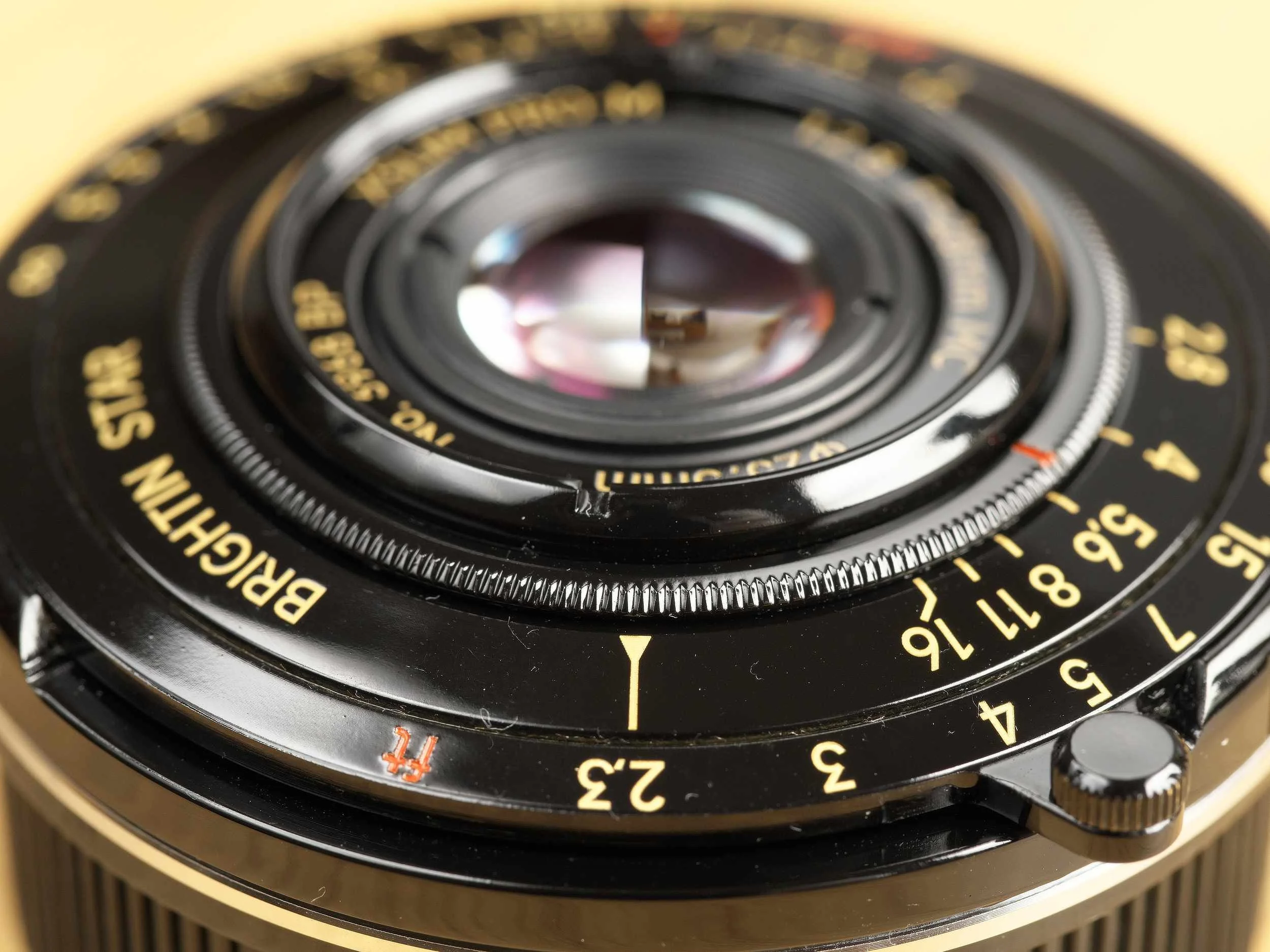
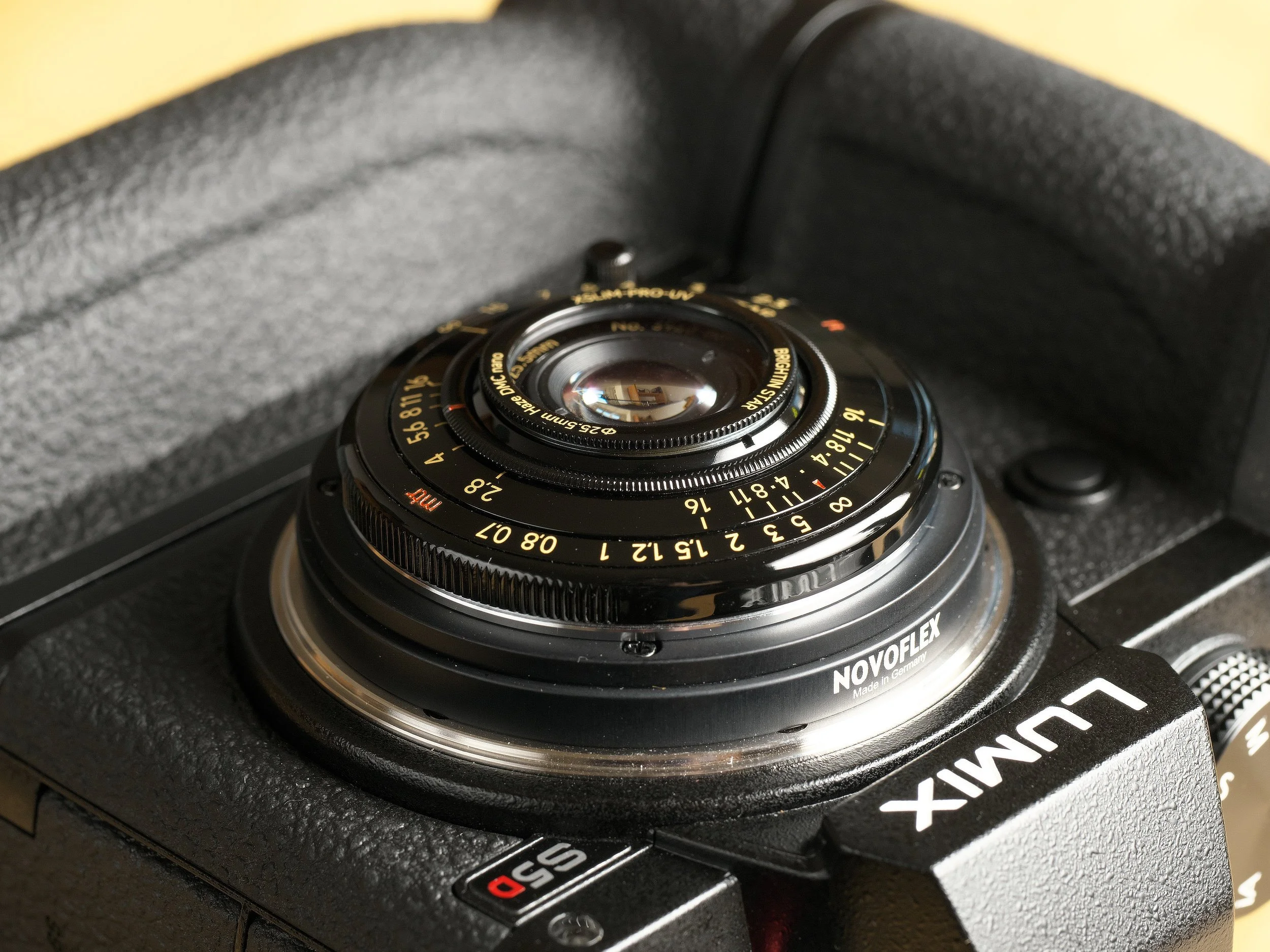
The design language pays clear tribute to the idiosyncratic works of Miyazaki Optical (MS Optical). A defining feature here is the all-brass housing. While this material choice complicates manufacturing, it adds a tactile density and premium feel that modern aluminum lenses often lack. The black lacquer finish is designed to wear over time, revealing the brass underneath to create a unique patina.
That said, after exposing approximately 3,000 frames, I have observed no signs of abrasion yet. Unless you are inclined to accelerate the process with a sheet of sandpaper, do not expect that 'worn' look to emerge quickly.
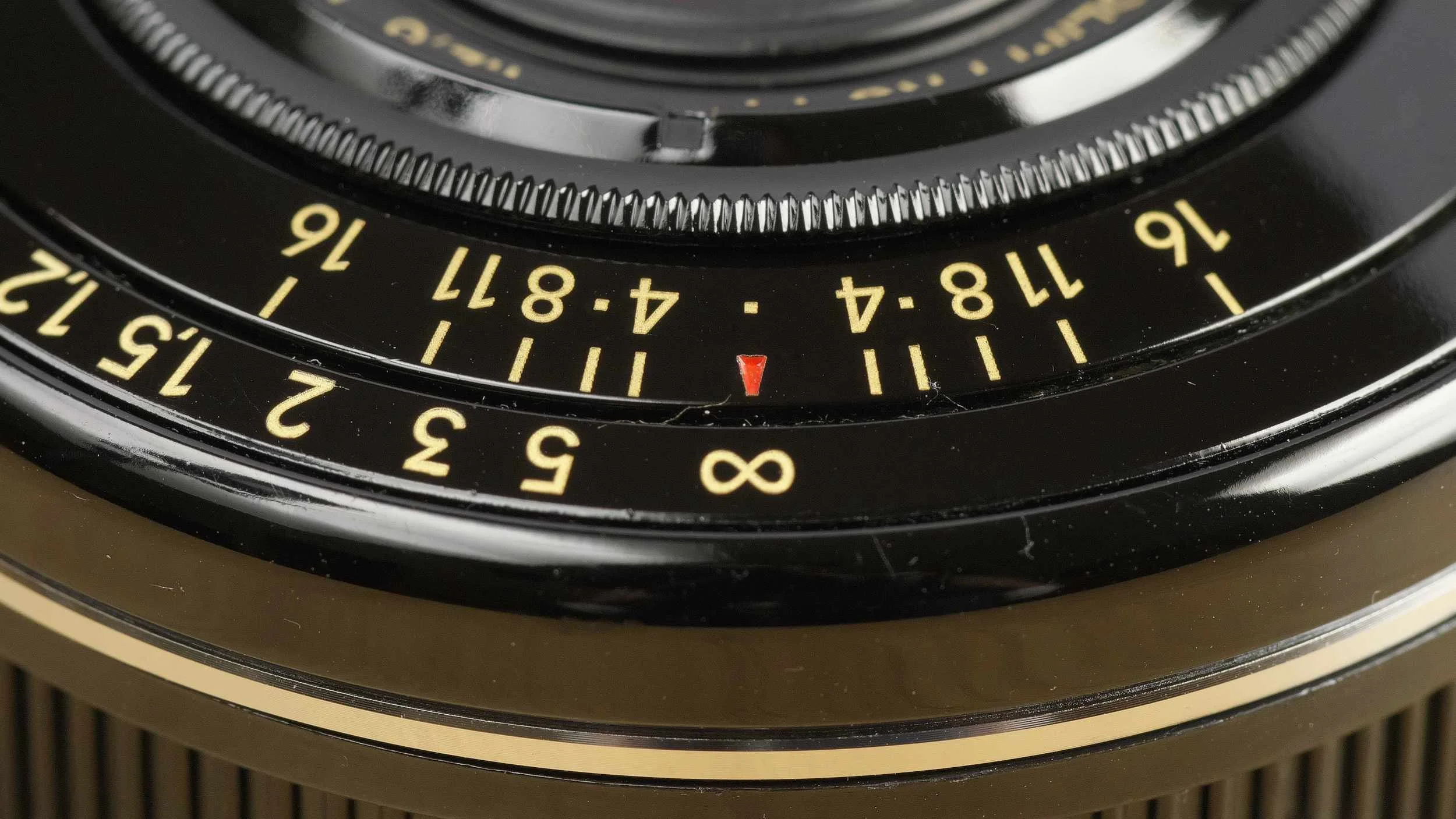
Paint-filled markings on the lens barrel.
Aesthetically, Brightin Star cites the black and gold styling as an homage to Tang Dynasty lacquer-ware. More importantly for the user, the markings are engraved and filled. This ensures legibility remains intact even if the paint eventually fades. Furthermore, the internal assembly uses standard retaining rings—a design choice that prioritizes longevity, allowing a qualified technician to service the lens in the future.
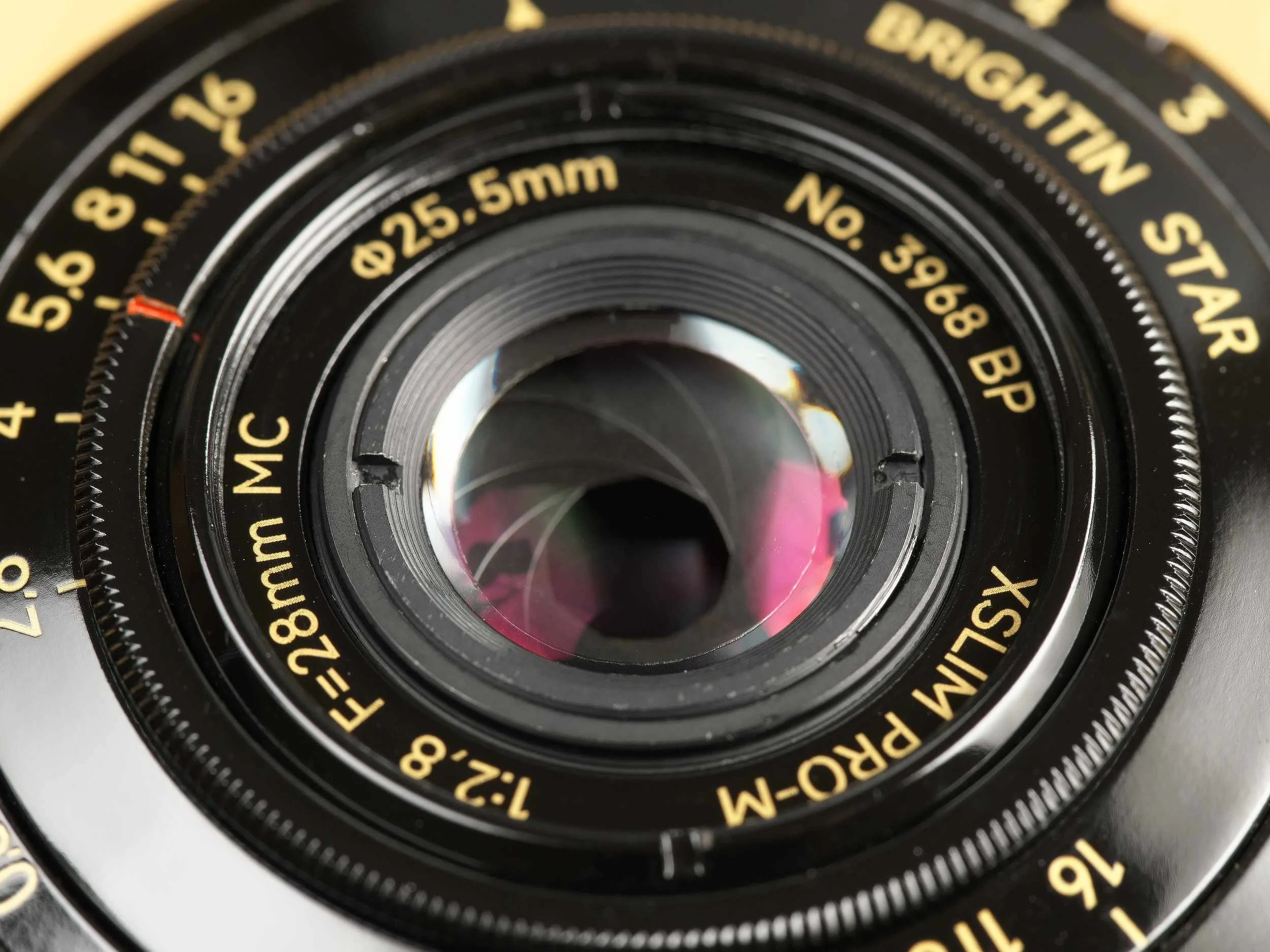
Tool marks on the retaining rings indicate a manual assembly process.
Operationally, the lens demands a period of acclimation. The focus lever is intuitive, but the aperture ring requires a degree of dexterity. Because the ring is narrow and de-clicked, one cannot select an aperture by feel alone; visual confirmation is required. The dampening does not always provide sufficient friction to prevent accidental adjustments, and in fast-paced reportage situations, fixing the aperture ring in place with small pieces of tape proved beneficial.
Hand-painted aperture ring
Aperture ring fixed with a piece of scotch tape
Finally, be aware that the mount does not feature 6-bit coding and that the lens has a non-standard 25.5 mm filter thread. Fortunately, Brightin Star offers a special ultra-slim UV filter, which is best purchased alongside the lens.
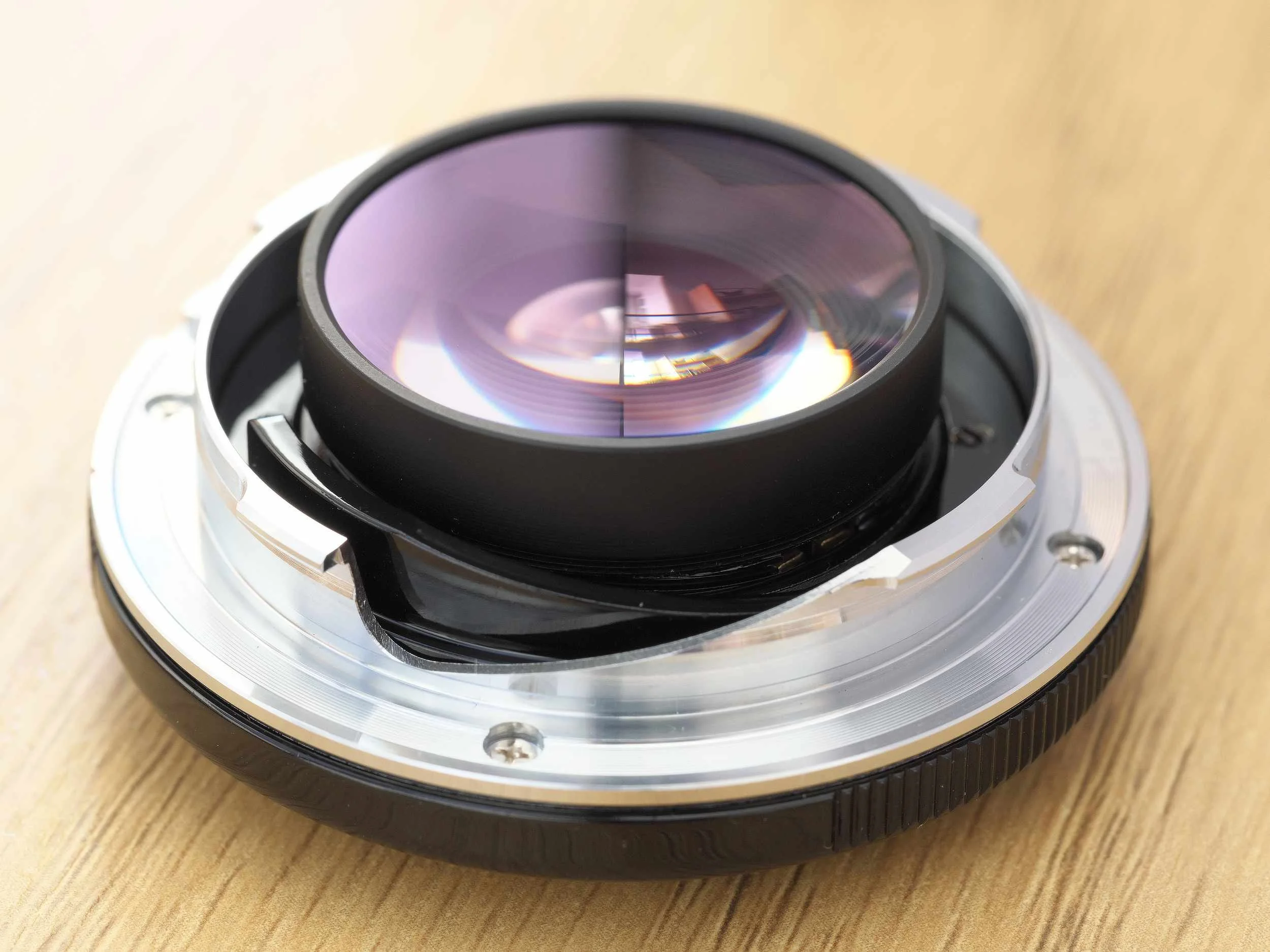
Rear view
4. Focusing, Field of View and Magnification
Technical Data
Focus range: 0.7 m to ∞
Focusing mechanism: mechanical
Focusing method: unit focusing
Focus throw: slightly below 45°
Horizontal angular field of view: 65° on a 36×24 mm
Maximum magnification: app. 0.04× (calculated for 36×24 mm)
Analysis
The lens employs a unit-focusing design, meaning the front optical assembly moves during operation. Consequently, the lens barrel extends slightly at minimum focus distance, and a change in the angle of view is observable as one adjusts focus.
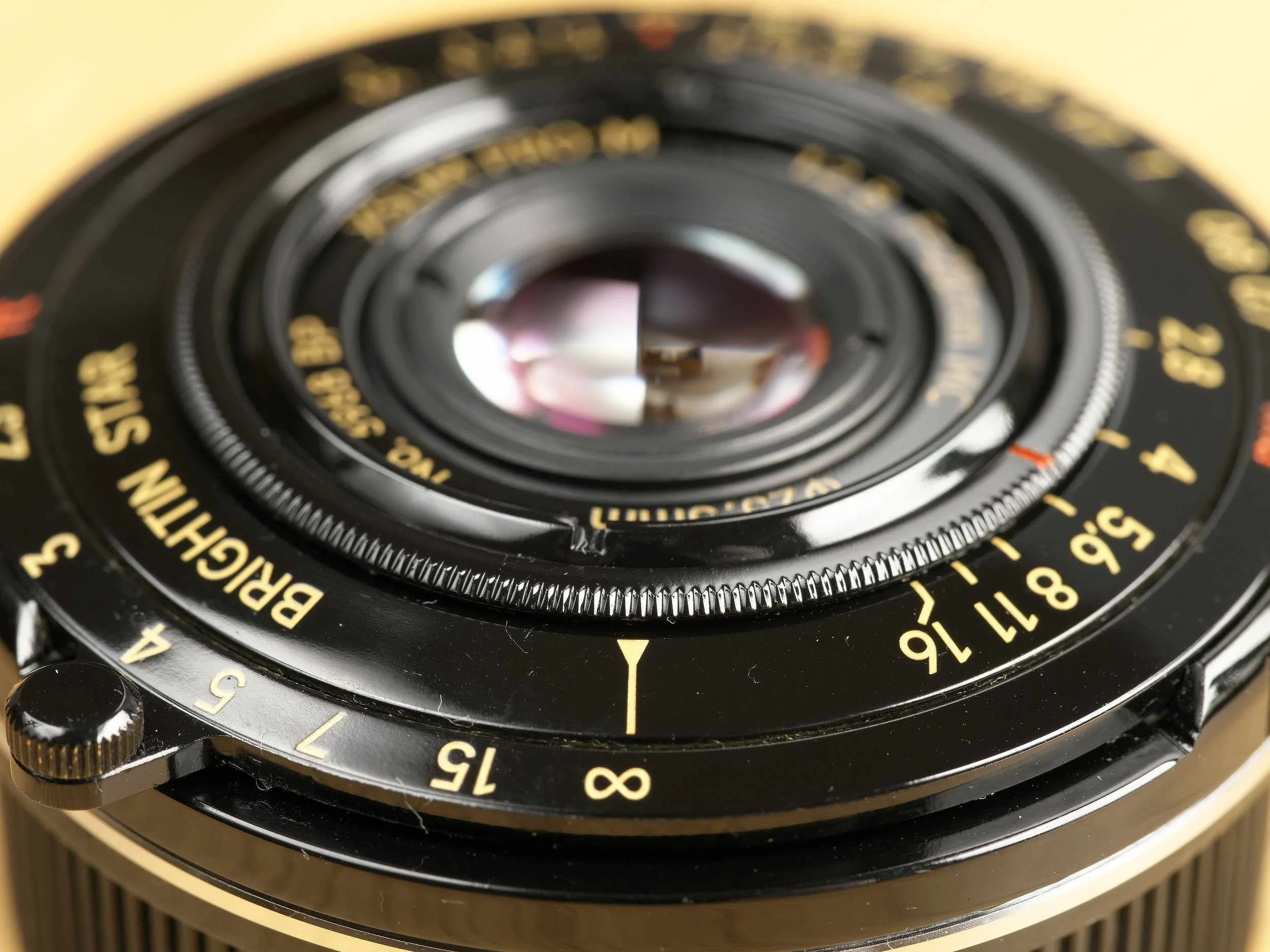
Focus set to infinity
Focus set to 0.7 m
Of greater importance to the practitioner, however, is the presence of focus shift. As the lens is stopped down, the focal plane migrates slightly. When relying on a rangefinder camera—particularly at close working distances—this characteristic demands careful attention to ensure your subject remains in critical focus.
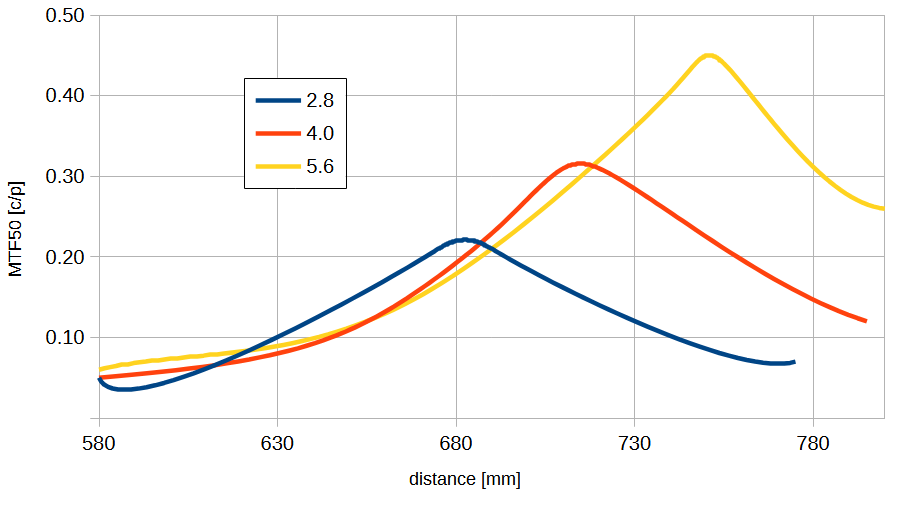
Focus shift indicated by MTF50 at f-numbers 2.8 | 4.0 | 5.6.
5. Optical Performance
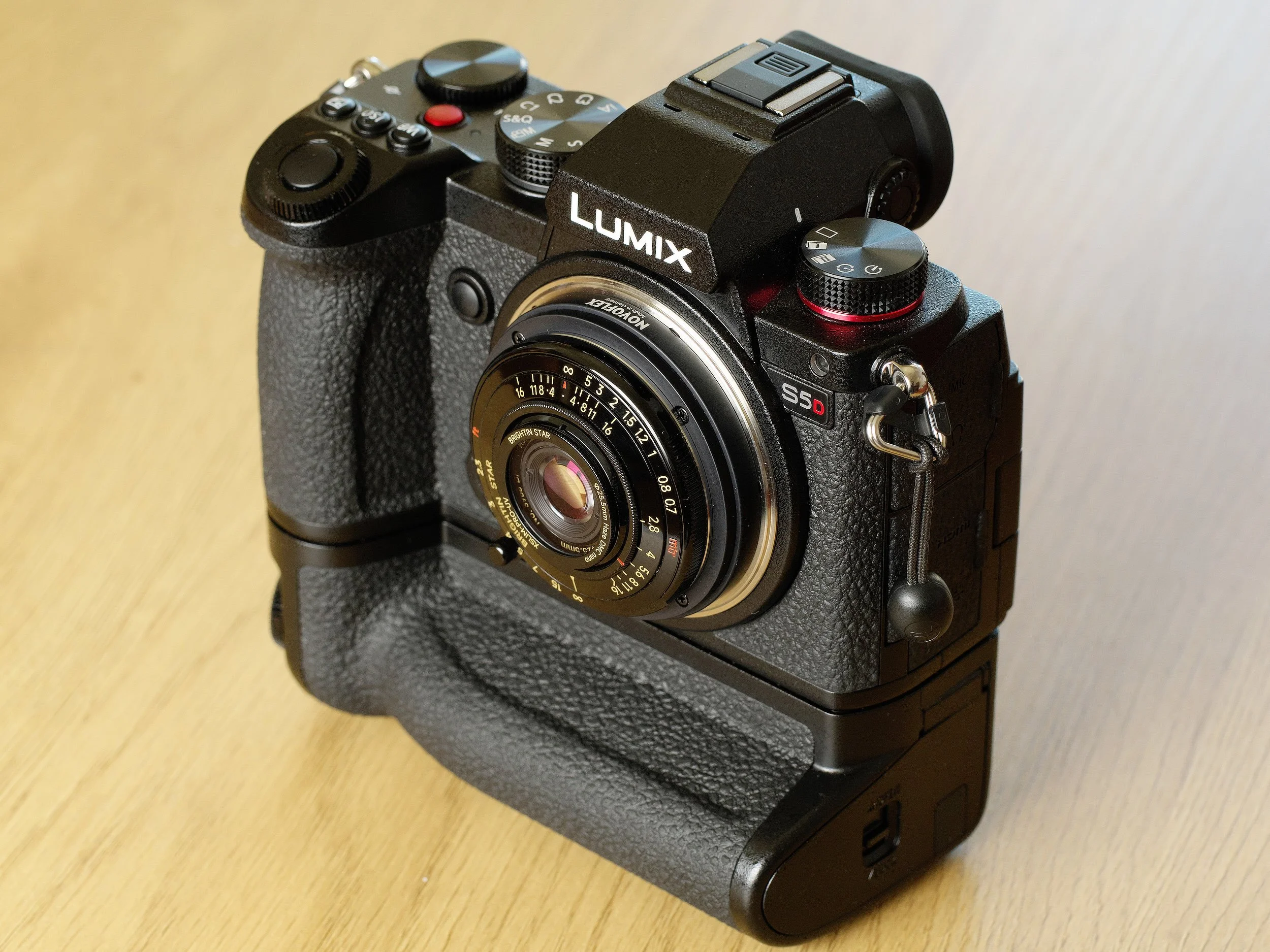
To contextualize the following results, please note that all quantitative tests were conducted using a Panasonic Lumix S5D with a 24-megapixel sensor (6,024 × 4016 pixels).
Analysis
Regarding optical definition, the lens achieves a peak MTF50 of approximately 1,700 LP/PH in the center of the frame at f/5.6. Given the extreme physical constraints of the design, this is a commendable figure. However, it is crucial to understand that this high level of acuity is strictly confined to the central axis. At wider apertures, the general contrast performance remains modest across the whole image frame.
Beyond the center, the image is characterized by a steep decline in definition and its uneven distribution. This fall-off is primarily driven by significant monochromatic aberrations and pronounced field curvature. Consequently, even when stopped down peripheral details remain noticeably soft. Therefore, for applications requiring consistent acutance across the frame—such as large-format printing—stopping down to at least f/5.6 is mandatory.
The limitations at the edges are further exacerbated by pronounced astigmatism and coma. These aberrations not only reduce sharpness but also introduce visible artifacts when rendering high-frequency details. To effectively mitigate these artifacts, one must stop down to f/11.
Conversely, chromatic aberrations—both longitudinal and lateral—are reasonably well-controlled. While measurable, they are not intrusive when viewing standard 36×24 mm frames at normal magnifications.
Structurally, the lens exhibits a complex, progressive barrel distortion. Correcting the geometry in post is therefore not a linear process; it requires approximately -4% adjustment in the mid-frame and nearly -8% at the periphery. In practice, this means a complete correction is impossible without a custom lens profile. Analog photographers, who cannot rely on digital rectification, should carefully assess whether this lens is suitable for architectural subjects or scenes with prominent horizontal lines.
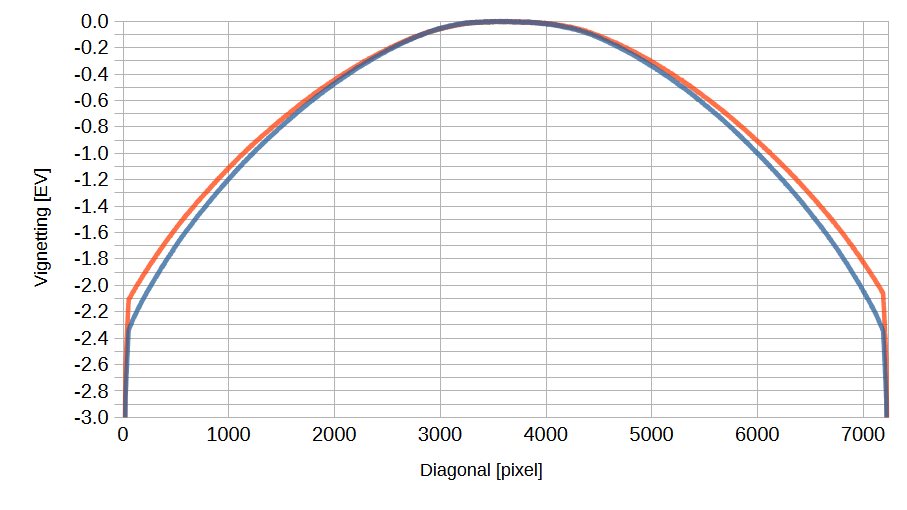
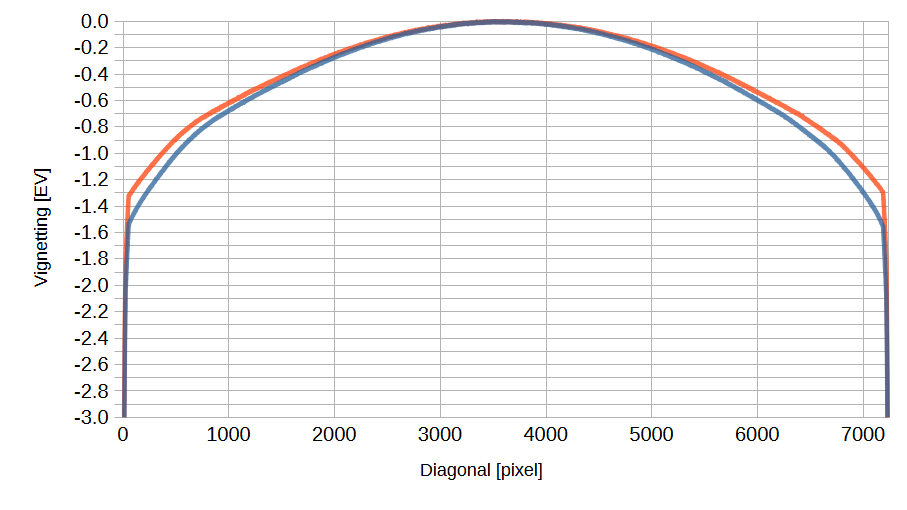
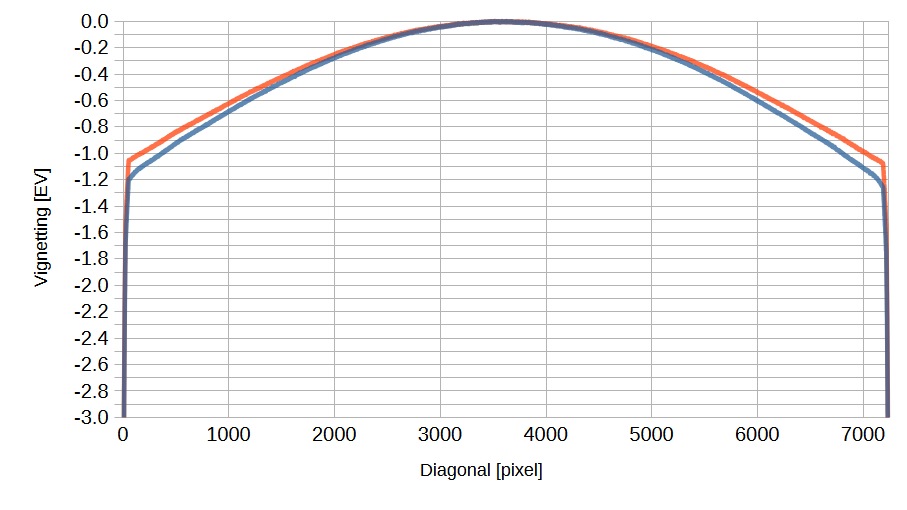
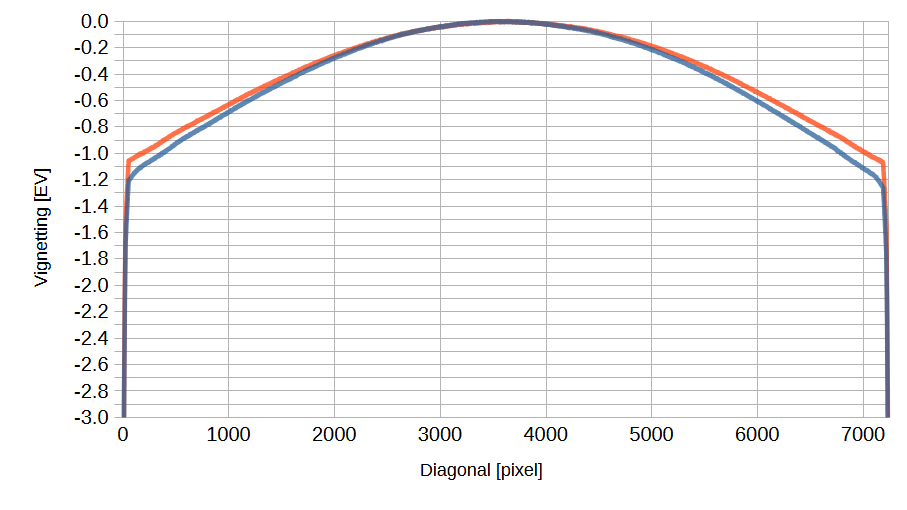
Finally, illumination fall-off is significant. At f/2.8, vignetting reaches approximately -2.4 EV. While stopping down gradually improves uniformity, these gains plateau at f/5.6. The fact that vignetting persists beyond this aperture suggests that we are either reaching the limits of the lens’s image circle or encountering issues with the steep angle of incidence on the digital sensor.
Test Data
Spatial Frequency Response
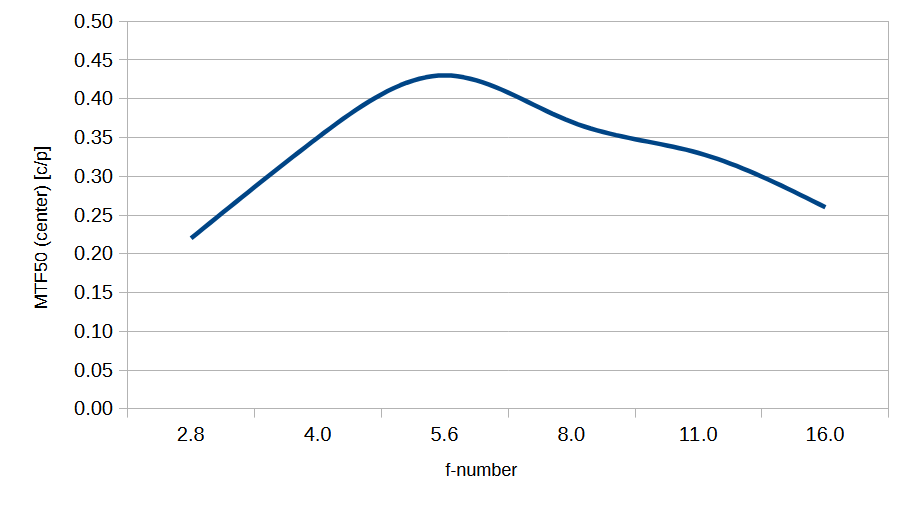
Center MTF50 performance in cycles / pixel at various apertures
Contrast at various LP/mm vs. distance from image center at f/2.8
MTF50 of the full frame at f/2.8 indicates uneven sharpness distribution.
Monochromatic Aberrations
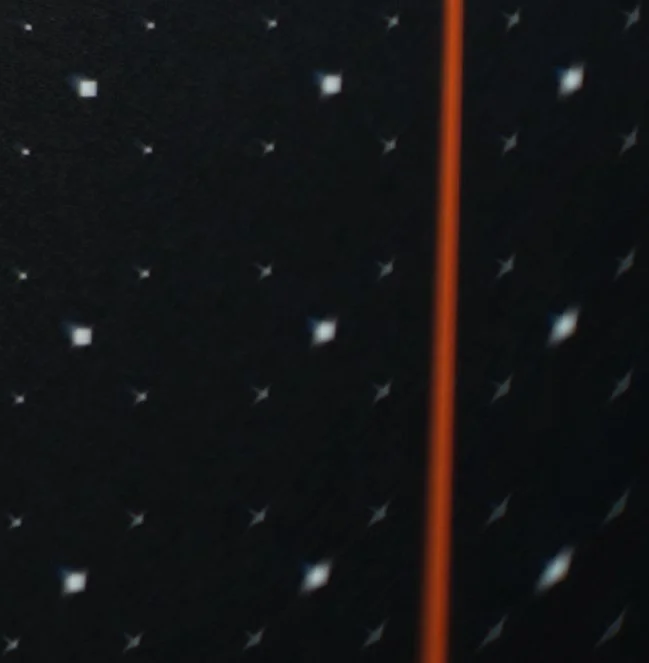
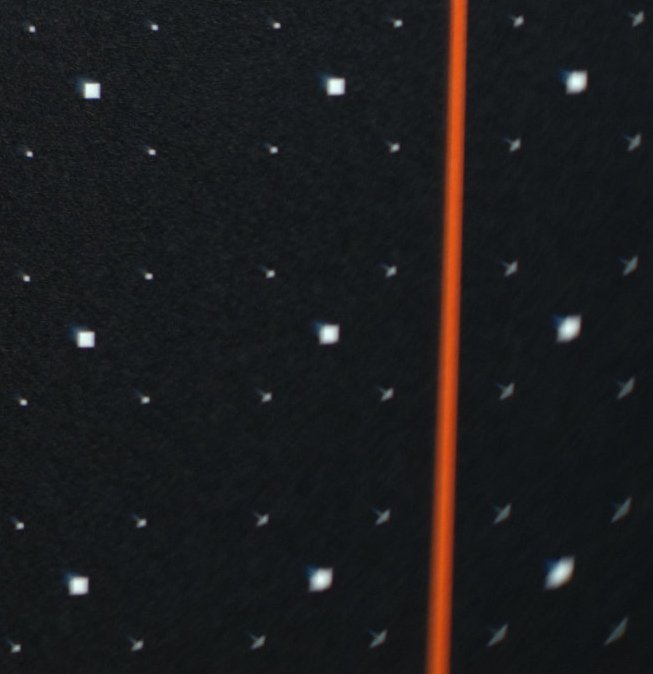
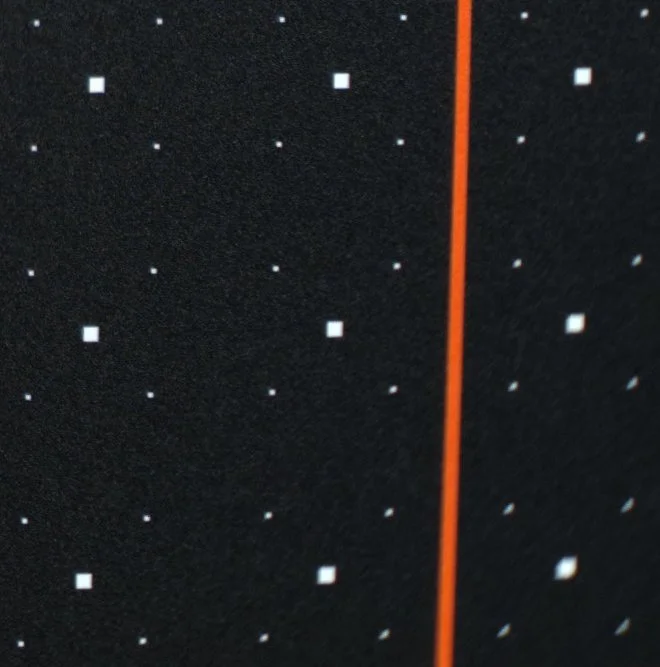
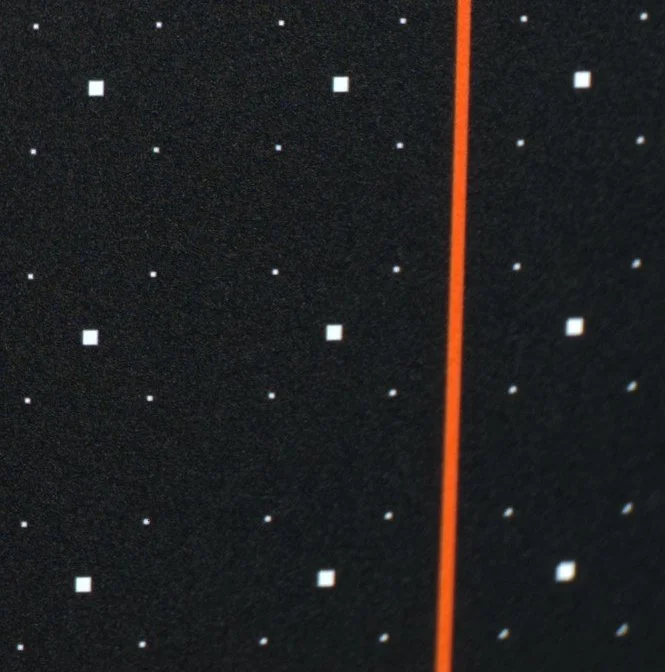
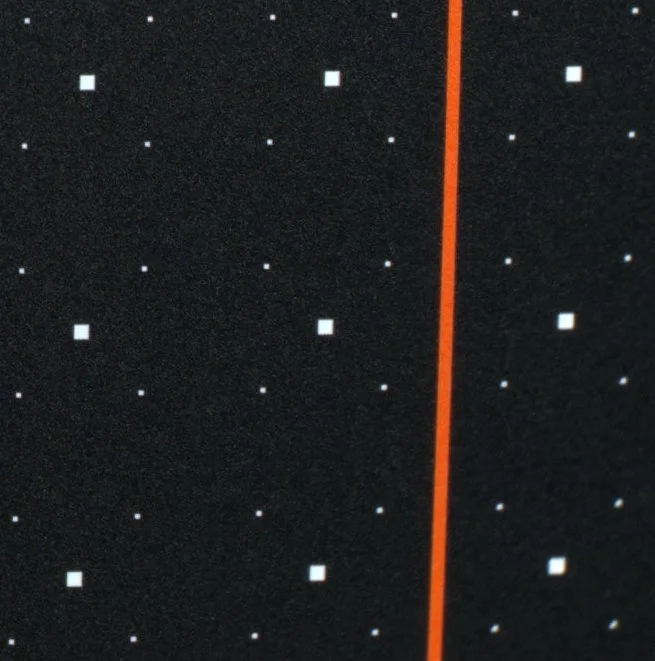
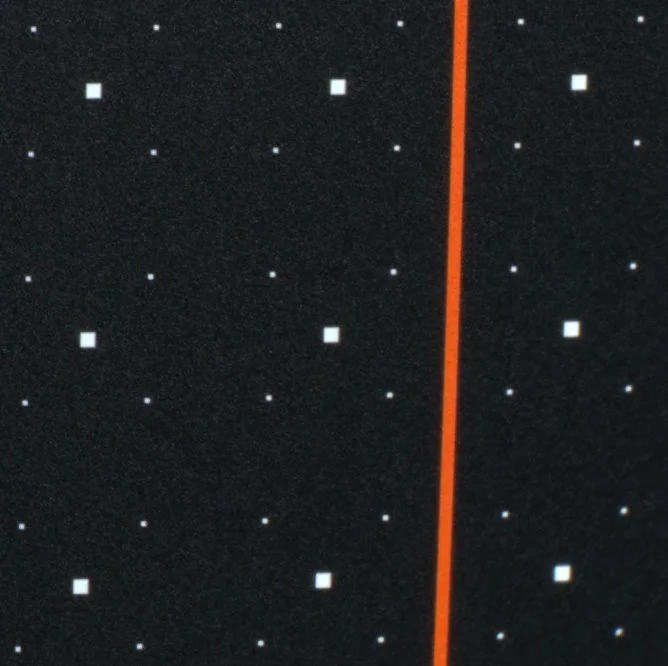
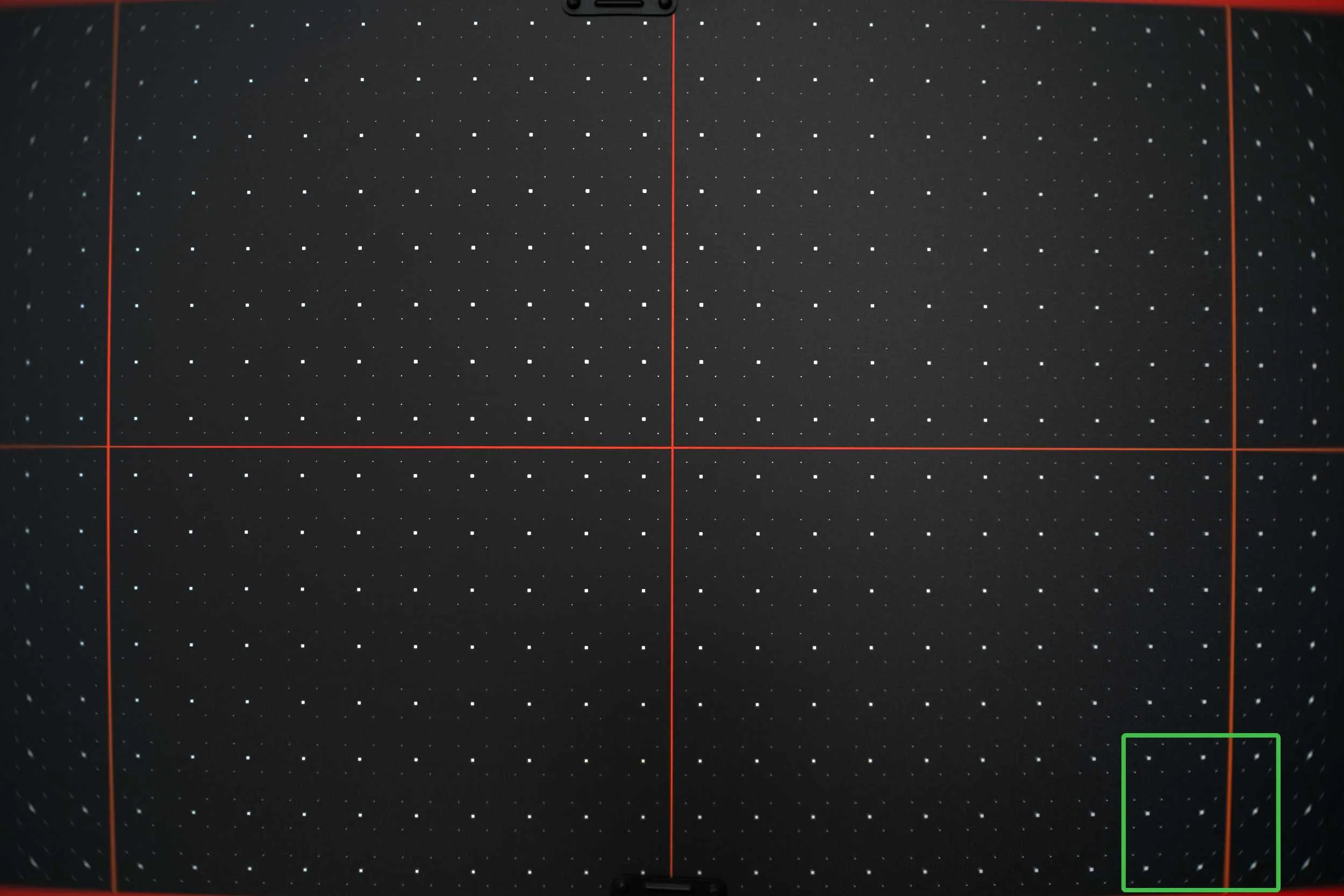
The green box indicates the magnified portion of the test chart.
Chromatic Aberrations
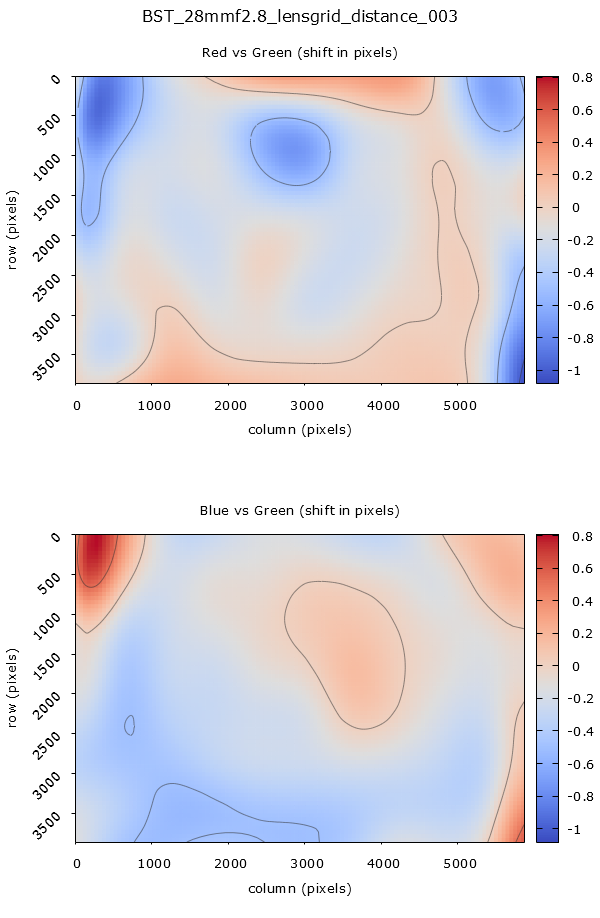
Full frame chromatic aberrations at f/2.8
Curvilinear Distortion

The distortion test pattern shows pronounced barrel distortion.
Illumination Fall-Off
The graphs below show illumination fall-off at various f-stops (orange: 0.7 m | blue: inf.):
6. Verdict
Ultimately, the Brightin Star 28mm f/2.8 is best defined as a 'character lens.' It is ideally suited for street photography and similar applications where absolute optical perfection is secondary to atmosphere, or where aberrations can be mitigated simply by stopping down.
Despite its distinct rendering, this is by no means a low-quality optic—quite the opposite. When judged against the constraints of its diminutive size, its performance is exceptional. Naturally, it is outperformed by larger designs that grant optical engineers more freedom, but that is a calculated trade-off.
Overall, the Brightin Star is a high-quality, boutique option for the discerning connoisseur who desires a lens scarcely larger than a body cap. Furthermore, it stands as a testament to Chinese craftsmanship and industrial prowess, proving that the ability to manufacture a high-precision instrument at a reasonable cost is a commendable reality.
7. Sample Images
Reportage photography with the Leica M8 and the Brightin Star 28mm f/2.8 LM
Rediscovering the Brightin Star 28mm with the Lumix S5D